
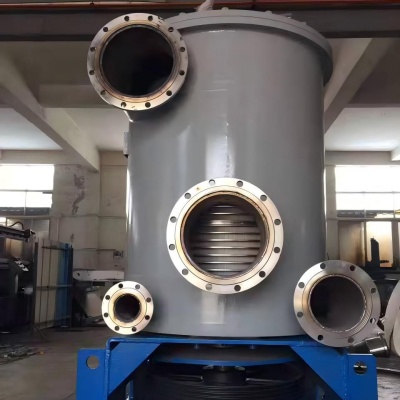
Pressure screening plays a critical role in every pulp and paper mill. Whether processing virgin pulp, recycled fiber, OCC, or mixed furnish, selecting the correct screen basket slot size directly influences pulp cleanliness, production efficiency, fiber recovery, equipment reliability, and final paper quality.
Although many mills focus on rotor design or screening capacity, the slot opening of the screen basket is often the key factor determining overall screening performance.
This article explains how pressure screens work, how slot size affects screening results, and how to select the most appropriate screen basket for different applications.
A pressure screen is designed to continuously separate acceptable fibers from contaminants under pressurized operating conditions.
Typical contaminants removed include:
Shives
Fiber bundles
Plastics
Stickies
Sand particles
Lightweight debris
Other non-fibrous impurities
Pressure screens are commonly installed in both stock preparation systems and approach flow systems, where they protect downstream equipment while ensuring clean, stable pulp enters the next production stage.
Compared with conventional screening equipment, modern rotor pressure screens provide:
Higher screening efficiency
Larger production capacity
Lower maintenance costs
Continuous self-cleaning operation
Stable long-term performance
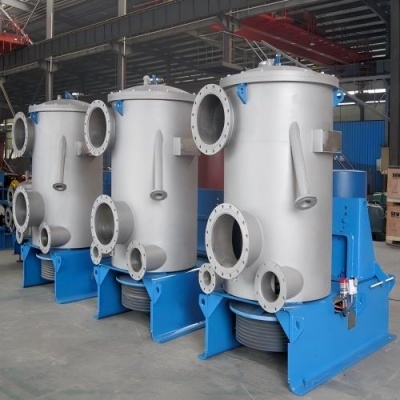
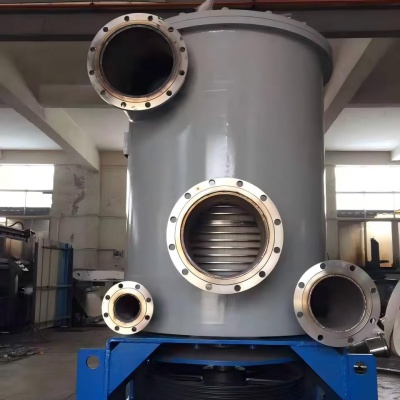
A pressure screen combines two operating principles to achieve continuous screening.
Stock enters the screening chamber tangentially.
The pressure difference between the inside and outside of the screen basket forces acceptable fibers through the screen slots while contaminants remain inside the basket.
Accepted stock exits through the accept outlet, while rejects are continuously discharged.
The rotor rotates at high speed close to the screen basket.
As the rotor passes each slot, alternating positive and negative pressure pulses are generated.
The positive pressure pushes fibers through the basket, while the negative pressure momentarily reverses liquid flow to remove fibers and contaminants trapped in the slots.
This automatic cleaning action minimizes plugging and maintains stable screening efficiency without interrupting production.
Selecting the correct slot width depends primarily on the screening position within the process.
Purpose:
Separate long fibers from short fibers for optimized refining or papermaking.
Recommended Practice:
Wave-type slotted baskets are commonly used because they create localized turbulence that improves fiber fractionation efficiency.
Since every furnish is different, slot size should be selected according to the desired long-fiber retention ratio rather than following a fixed value.
Typical Slot Size:
0.25–0.55 mm
Main Objective:
Remove large contaminants
Protect downstream equipment
Maintain high production capacity
Typical Applications:
OCC recycling
Waste paper processing
Mechanical pulp preparation
Typical Slot Size:
0.15–0.30 mm
Most commonly used:
0.15–0.25 mm
Fine slot baskets remove smaller contaminants while producing cleaner accepted pulp.
Although screening capacity is generally lower than hole baskets, the improvement in pulp quality often justifies their use.
Typical Slot Size:
0.15–0.25 mm
Installed immediately before the headbox, the approach flow pressure screen represents the final screening stage before papermaking.
Its primary objectives include:
Delivering stable stock consistency
Improving formation
Reducing contaminants entering the paper machine
Enhancing finished paper surface quality
Typical operating parameters include:
Feed Pressure: 0.10–0.25 MPa
Pressure Differential: 0.01–0.05 MPa
Choosing the right slot width requires more than simply considering the screening stage.
Engineers should also evaluate:
Chemical pulp, mechanical pulp, recycled fiber, OCC and mixed furnish all have different screening characteristics.
Long fibers generally require wider slots to reduce plugging and excessive fiber loss.
Higher-quality products such as tissue, fine paper and specialty grades usually require finer screening.
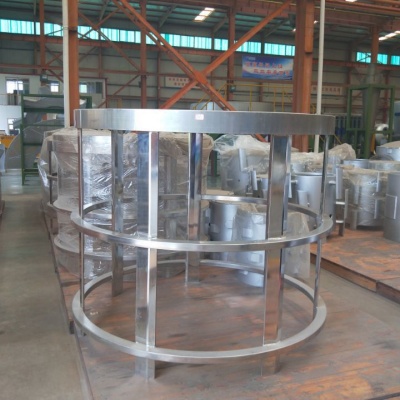
The most common designs include:
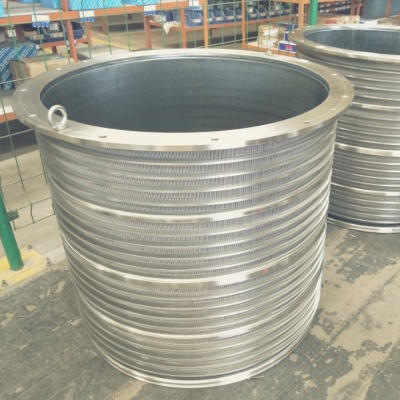
Slotted Screen Basket
Hole Screen Basket
Wave-Type Slotted Basket
Typical slot widths range from 0.20 to 1.00 mm, with an open area of approximately 7–8%.
Different pressure screen designs—including Internal Flow, External Flow and Up-flow Pressure Screens—have different operating characteristics.
External rotor internal-flow pressure screens are especially suitable for fine slotted baskets between 0.15 and 0.25 mm.
Proper installation and operation are equally important.
Recommended practices include:
Adjust the rotor-to-basket clearance according to manufacturer specifications.
Ensure sealing performance prevents leakage greater than the selected slot width.
Maintain reject rates between 5% and 15%, depending on furnish quality and process objectives.
Routine inspection and preventive maintenance help maximize screening efficiency and extend equipment service life.
There is no universal pressure screen slot size suitable for every paper mill.
The best selection depends on balancing:
Screening position
Pulp characteristics
Fiber length
Product quality requirements
Production capacity
Equipment configuration
By selecting the appropriate screen basket and optimizing operating parameters, paper mills can significantly improve pulp cleanliness, production stability, fiber recovery and finished paper quality.
Huatao Group is a professional supplier of pulp and paper machinery, stock preparation equipment and paper machine spare parts.
Our product portfolio includes:
Internal Flow Pressure Screens
External Flow Pressure Screens
Up-flow Pressure Screens
Slotted Screen Baskets
Hole Screen Baskets
Screening Rotors
Complete Stock Preparation Solutions
Our engineering team provides customized screening solutions tailored to different raw materials, production capacities and paper grades.
Website: www.papermakingtech.com
Email: market@huataogroup.com
WhatsApp / WeChat: +86 18033763037
#PressureScreen #PaperMachinery #PaperIndustry #PulpAndPaper #PaperMill #StockPreparation #ApproachFlow #ScreenBasket #PaperMachine #PulpScreening #EngineeringSolutions #PaperTechnology #IndustrialEquipment #HuataoGroup
can not be empty
can not be empty

HUATAO GROUP
ADD : No.298 Zhonghua North Street, Xinhua District, Shijiazhuang City, China.
TEL : +86 0311 80690567
EMAIL :market@huataogroup.com
Web: www.papermakingtech.com
Mobile: +86 18033763037 (  WhatsApp)