
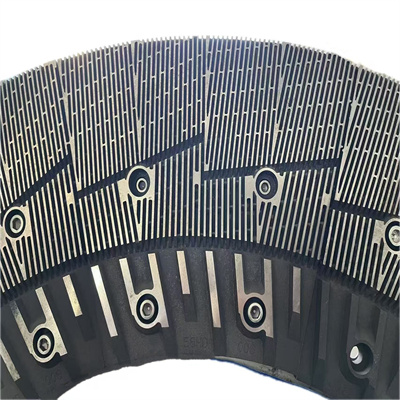
Choosing the right refiner plates depends on fiber characteristics, refining objectives, plate geometry, specific edge load, operating consistency, and energy consumption. Hardwood pulp generally requires gentler refining to preserve short fibers, while softwood pulp needs controlled fibrillation without excessive fiber shortening. Recycled pulp requires a balanced plate design that accommodates variable fiber quality, fines, and contaminants.
The most suitable refiner plate is not necessarily the hardest, most aggressive, or most expensive option. It is the design that achieves the required pulp properties at an acceptable energy cost while maintaining reliable operation and reasonable service life.
For paper mills producing tissue, printing and writing paper, kraft paper, linerboard, or corrugated medium, proper refiner plate selection can significantly influence fiber bonding, drainage, sheet strength, and Paper Machine and Parts runability.
Choose refiner plates by matching plate geometry to fiber type, refining objective, and energy constraints. Hardwood needs gentle fine-bar designs with low specific edge load. Softwood needs controlled fibrillation with adequate fiber transport. Recycled pulp needs balanced, wear-resistant plates that handle contaminants. Verify compatibility, material grade, and total operating cost before purchase.
Match plate pattern to furnish: hardwood, softwood, or recycled.
Fine-bar plates support low-intensity refining for short fibers.
Groove width and bar angle affect stock transport and hydraulic capacity.
Specific Edge Load (SEL) describes refining intensity.
Calculate net specific refining energy in kWh/ODt.
Monitor fiber length, fines, tensile, tear, and drainage.
Compare suppliers on total operating cost, not price alone.
Verify refiner model, plate dimensions, and material grade before ordering.
| Factor | Hardwood | Softwood | Recycled | ||
| Fiber type |
|
Long fibers | Variable, processed | ||
| Refining objective | Bonding, flexibility | Fibrillation, strength | Restore bonding | ||
| Plate pattern | Fine-bar | Fine or coarse | Balanced | ||
| Refining intensity | Lower | Moderate to higher | Furnish-dependent | ||
| Key risk | Fines, bulk loss | Fiber shortening | Wear, over-refining | ||
| Key metrics |
|
Tensile, tear, length | Strength, drainage, energy |
A refiner is a stock preparation device that mechanically treats pulp fibers between rotating and stationary refiner plates. The plates contain alternating bars and grooves. As fibers pass through the refining zone, they experience repeated bar crossings that promote fibrillation, fiber shortening, fines generation, and fiber flexibility changes.
Refiner plates are the working surfaces that directly contact the pulp. Their geometry — bar width, groove width, bar angle, and pattern — determines the intensity and nature of fiber treatment.
Refining sits within the stock preparation stage. Upstream, pulping and screening remove contaminants and prepare the furnish. Downstream, refined pulp proceeds to approach flow, forming, pressing, and drying. Refiner plate selection affects fiber development, drainage, sheet strength, and ultimately paper machine drainage performance and runability.
Refiner plates are manufactured from different wear-resistant alloys and stainless steel grades. Material selection depends on operating conditions, corrosion exposure, impact loading, and abrasion.
Common material options may include:
High-chromium alloy cast steel
Wear-resistant cast stainless steel
Martensitic stainless steel
Precipitation-hardening stainless steel
Other application-specific alloys
Higher hardness does not automatically guarantee longer service life. A suitable material must provide the required combination of wear resistance, corrosion resistance, toughness, and dimensional stability.
Hardwood pulp, including eucalyptus, birch, and other short-fiber pulps, generally contains shorter fibers than softwood pulp. The primary refining objective is often to improve fiber flexibility, surface fibrillation, and bonding potential without excessive fiber cutting or loss of bulk.
For many low-consistency hardwood refining applications, fine-bar or ultra-fine-bar refiner plates can provide frequent, relatively low-intensity fiber interactions. Important considerations include narrower bars and appropriately designed grooves, higher cutting edge length, lower specific edge load, controlled fines generation, and preservation of fiber length and paper bulk.
Excessive refining intensity may increase fines production, reduce drainage performance, and negatively affect certain paper properties. For mills processing eucalyptus pulp for tissue or printing paper, the preferred plate design should reflect the required balance between tensile strength, softness, bulk, and drainage.
Softwood pulp, such as pine or spruce kraft pulp, generally contains longer fibers with higher reinforcement potential. The objective is often to improve external and internal fibrillation while preserving sufficient fiber length for tear strength and sheet reinforcement.
Compared with hardwood refining, softwood applications may tolerate or require higher refining intensity, depending on the furnish and paper grade. Plate selection should consider bar width and groove width, bar crossing angle, effective cutting edge length, fiber passage and pumping characteristics, and specific edge load and net refining energy.
Wider grooves or more open plate patterns may be suitable when fiber transport and hydraulic capacity are important. However, a coarse pattern is not automatically the best choice for every softwood application. Low-intensity fine-bar designs may also be appropriate when fiber preservation and energy efficiency are priorities.
Recycled pulp, including OCC, mixed wastepaper, and recovered printing paper, introduces additional challenges. Recycled fibers have already experienced previous pulping, drying, and papermaking cycles. Their bonding ability, fiber length, and flexibility may differ from virgin fibers. Recycled stock can also contain fillers, fines, stickies, sand, and other contaminants.
The selected refiner plates should provide sufficient fiber development while minimizing unnecessary fiber cutting and excessive fines generation. For recycled pulp, consider furnish composition and recycled fiber quality, existing fiber length and fines content, contaminant loading, plate wear resistance, required paper strength and drainage, and refining energy consumption.
A highly aggressive plate pattern may increase energy consumption without producing a proportional improvement in finished paper strength.
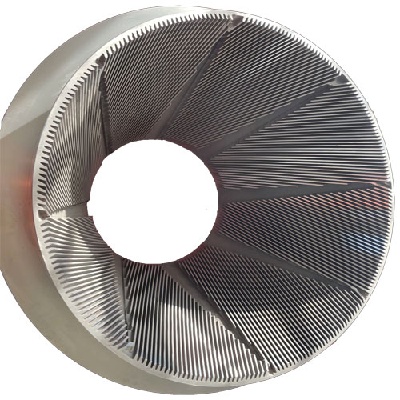
For different refining applications, HUATAO GROUP supplies Refiner Plates and Fillings for Pulp and Paper Mills, including designs for disc and conical refiners.
Refiner plate geometry determines how fibers interact with the rotor and stator during refining. Three important geometric parameters are bar width, groove width, and bar angle.
The refining surface contains alternating bars and grooves. Bar width affects the refining contact geometry, while groove width and depth influence stock transport, hydraulic capacity, and fiber movement through the refining zone.
Fine-bar designs can provide more bar crossings and a greater cutting edge length within a given refining area. Coarser patterns may provide greater hydraulic capacity and improved passage of long fibers or challenging stock, depending on the application. The correct design must balance refining action with stock flow and mechanical durability.
Specific Edge Load is a widely used parameter for describing refining intensity. It is calculated as:
SEL = Net Refining Power / Cutting Edge Length
Where:
SEL = Specific Edge Load, J/m or Ws/m
Net Refining Power = Loaded power minus no-load power
CEL = Cutting Edge Length per unit time, m/s
For example, if a refiner operates at 150 kW net refining power and provides 150 km/s of cutting edge length:
SEL = 150,000 W ÷ 150,000 m/s
SEL = 1.0 J/m
This example is illustrative.
A higher SEL generally represents greater energy applied per unit of bar-crossing edge length, while a lower SEL indicates gentler refining interactions. However, SEL does not describe every aspect of fiber treatment. Bar width, crossing angle, stock consistency, plate clearance, and fiber properties also influence the actual refining result.
Published refining research commonly discusses lower SEL values for hardwood than for softwood chemical pulps. For example, hardwood refining studies have examined values around 0.2–0.6 J/m while softwood refining can operate at higher intensities depending on the application. These figures should be treated as engineering references rather than universal operating targets.
The appropriate SEL must be determined according to the actual furnish, refiner design, and required paper properties.
Cutting Edge Length describes the total effective bar-crossing edge length generated per second. At the same net refining power, increasing the effective CEL reduces the calculated SEL. This is one reason why fine-bar refiner plates can support low-intensity refining. However, simply maximizing CEL is not sufficient. The plate must still provide acceptable hydraulic capacity, stable stock flow, and adequate mechanical strength.
For different disc refiner configurations, explore Refiner Discs and Replacement Refiner Plates.
Refining is an important energy-consuming operation in stock preparation. The objective should not be to minimize motor power at any cost, but to achieve the required fiber properties using the lowest practical net energy input.
Net Specific Refining Energy can be calculated as:
Net Specific Energy (kWh/ODt) = Net Refining Power (kW) / Oven-Dry Pulp Throughput (ODt/h)
For example:
Total operating power: 250 kW
No-load power: 50 kW
Net refining power: 200 kW
Oven-dry pulp throughput: 5 ODt/h
Net Specific Energy = 200 ÷ 5
Net Specific Energy = 40 kWh/ODt
This value can be used to compare refining performance when pulp characteristics and operating conditions are comparable.
More refining does not always produce stronger paper. Excessive refining can shorten fibers, generate additional fines, reduce drainage, and increase drying demand. For some paper grades, over-refining may improve one strength property while reducing another. A successful refining strategy must balance fiber development, paper strength, drainage, bulk, and energy consumption.
Canadian Standard Freeness and Schopper-Riegler Degree are commonly used to evaluate pulp drainage characteristics. However, achieving the same CSF or SR does not necessarily mean two refiner plate designs produce equivalent fiber quality. A complete evaluation should include fiber length distribution, fines content, tensile index, tear index, burst index, freeness, net specific energy consumption, and paper machine drainage performance.
For example, two plate patterns may both increase pulp refining from 20°SR to 35°SR, but one may produce greater fibrillation while the other causes more fiber cutting. The final paper properties can therefore differ even when the measured CSF is identical.
When purchasing replacement refiner plates, price and nominal dimensions should not be the only selection criteria. A reliable supplier should be able to confirm dimensional compatibility, material specifications, plate pattern suitability, and manufacturing quality.
Before ordering, confirm:
Refiner manufacturer and model
Plate outer diameter and inner diameter
Rotor and stator configurations
Number of segments
Segment thickness
Mounting hole positions
Bolt hole dimensions
Rotation and pumping direction
Existing plate pattern or drawing number
Even when two refiner plates have the same nominal diameter, they may not be interchangeable. Mounting dimensions, segment orientation, and plate geometry must be verified carefully.
For replacement components, see Refiner Segments for Paper Making.
Refiner plates are manufactured from different wear-resistant alloys and stainless steel grades. Material selection depends on operating conditions, corrosion exposure, impact loading, and abrasion.
Common options may include:
High-chromium alloy cast steel
Wear-resistant cast stainless steel
Martensitic stainless steel
Precipitation-hardening stainless steel
Other application-specific alloys
Higher hardness does not automatically guarantee longer service life. A suitable material must provide the required combination of wear resistance, corrosion resistance, toughness, and dimensional stability.
A useful comparison should consider:
Total Operating Cost = Purchase Cost + Energy Cost + Maintenance Cost + Downtime Cost + Quality-Related Losses
For example, a lower-priced refiner plate may become more expensive if it requires frequent replacement, consumes more energy, or produces inconsistent pulp quality. Suppliers should therefore be compared using operating performance and service life, not simply the initial quotation.
When evaluating a refiner plate supplier, request detailed manufacturing drawings, material grade and hardness specifications, plate pattern drawings or photographs, rotor and stator identification, dimensional inspection records, relevant application experience, recommendations based on pulp furnish and operating conditions, and replacement and installation instructions.
If possible, conduct a controlled production trial and compare the results with the existing refiner plates.
| Symptom | Possible Causes | Checks / Actions | |
| Refiner plates wear unevenly | Misalignment, incorrect gap, abnormal loading | Check bearings, plate condition, calibration | |
| Increased energy at same freeness | Plate wear, wrong pattern, over-refining | Inspect plates, review SEL and net energy | |
| Fiber shortening excessive | Too aggressive plate, high intensity | Review plate pattern and refining intensity | |
| Drainage drops unexpectedly | Fines generation, over-refining | Check fiber length, fines, plate condition | |
| Plate breakage | Impact loading, incorrect material, foreign objects | Inspect upstream screening, verify material grade | |
| Inconsistent pulp quality | Plate wear, variable furnish, poor clearance |
|
Shift/daily: Monitor refiner power, freeness, and pulp quality
Weekly: Check plate clearance and vibration
Monthly: Trend net specific energy and wear patterns
Planned shutdown: Inspect plates, bearings, and seals
Spare inventory: Critical plate sets by refiner model
Actual intervals depend on OEM manuals and operating conditions.

1.Can I use the same refiner plate pattern for hardwood and softwood pulp?
A common pattern may be usable in some mixed-furnish applications, but it is not necessarily optimal for both fiber types. Hardwood and softwood have different refining requirements, so plate geometry should be selected according to the furnish and target paper properties.
2.Are fine-bar refiner plates always more energy-efficient?
No. Fine-bar designs can support low-intensity refining, but their performance depends on stock flow, consistency, refiner configuration, and required fiber development. Energy efficiency must be verified under actual operating conditions.
3.Which refiner plate material is best for recycled pulp?
The best material depends on contaminant loading, corrosion conditions, refining intensity, and operating requirements. Wear-resistant alloys or suitable stainless steel grades may be considered, but upstream contaminant removal is equally important.
4.How do I know when refiner plates need replacement?
Common warning signs include increased energy consumption at comparable pulp quality, declining refining performance, excessive plate wear, damaged bars, abnormal vibration, and unstable operating conditions.
5.What information should I provide when requesting replacement refiner plates?
Provide the refiner brand and model, existing plate drawings, dimensions, material requirements, pulp type, production capacity, stock consistency, operating power, and desired refining results.
5.What is specific edge load and why does it matter?
Specific Edge Load is net refining power divided by cutting edge length. It describes refining intensity. Lower SEL means gentler fiber interactions; higher SEL applies more energy per bar crossing. It helps compare plate designs but does not capture every aspect of fiber treatment.
7.How does groove width affect refining?
Groove width and depth influence stock transport, hydraulic capacity, and fiber movement through the refining zone. Wider grooves may suit high-flow or long-fiber applications; narrower grooves suit low-intensity refining.
8.Can I reduce refining energy without losing strength?
Yes, by selecting plate geometry that achieves target fiber development at lower net specific energy. Monitor fiber length, fines, and drainage — not just freeness — and avoid over-refining.
HUATAO GROUP has specialized in supplying pulp and paper machinery, stock preparation equipment, and replacement parts to customers worldwide since 2008. Our refiner-related product range includes single disc refiner plates, double disc refiner plates, conical refiner fillings, and hot disperser plates.
Contact Huatao
Email: market@huataogroup.com
Phone / WhatsApp: +86 18033763037
Website: http://www.papermakingtech.com
We warmly welcome customers from around the world to contact us and establish mutually beneficial partnerships.
can not be empty
can not be empty

HUATAO GROUP
ADD : No.298 Zhonghua North Street, Xinhua District, Shijiazhuang City, China.
TEL : +86 0311 80690567
EMAIL :market@huataogroup.com
Web: www.papermakingtech.com
Mobile: +86 18033763037 (  WhatsApp)